
 by Brad Perry
Canada’s wealthiest earners will face higher taxes to help pay for increased federal spending over the coming years.
An increase to the capital gains inclusion rate is part of the 2024-25 federal budget, tabled on Tuesday afternoon.
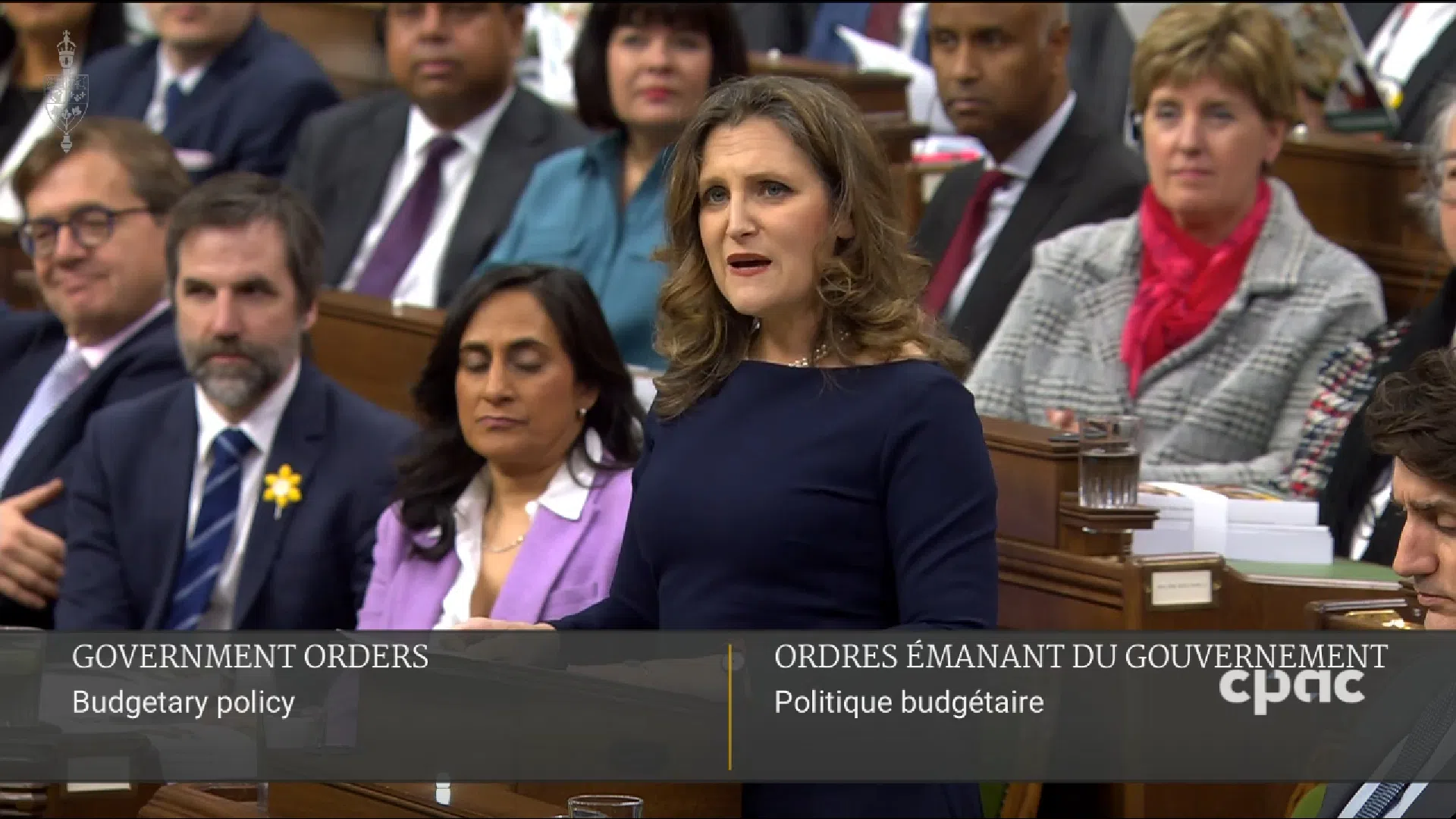
Finance Minister Chrystia Freeland said only 0.13 per cent of Canadians will end up paying more on their capital gains.
Federal officials said the increase is expected to generate an extra $19 billion in revenue over the next five years.
“This new revenue will help make life cost less for millions of Canadians, particularly Millennials and Gen Z. It will help fund our efforts to turbocharge the building of more homes,” Freeland said in her budget speech.
Dubbed ‘Fairness for Every Generation,’ the budget lays out steps to build more homes, make life cost less, and grow the economy.
It includes a strategy to unlock nearly 3.9 million new homes by 2031 — a pace “not seen since the Second World War,” said Freeland.
The government plans to do that through several measures, including the recently announced $6 billion Canada Housing Infrastructure Fund in addition to another $400 million added to the Housing Accelerator Fund.
To help those renting, the feds will launch a Rental Protection Fund and provide $1 billion to the Affordable Housing Fund for those who cannot afford a home.
They will also make the effort to build more homes on public land, as well as support skilled trade workers and create apprenticeships.
When it comes to making life more affordable, Ottawa plans to spend $1.5 billion over five years to launch the new national universal pharmacare plan.
There is $6 billion set aside for the new Canada Disability Benefit, $1 billion for a new National School Food Program, and additional funding to help increase the number of child-care spaces.
Freeland is projecting a deficit of about $40 billion for 2024-25, falling to $20 billion by 2028-29.
More to come.