
 by admin

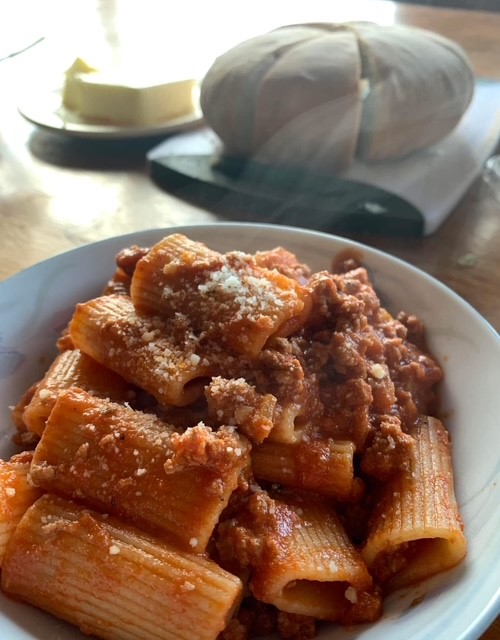
New cooking videos and recipes are always my go-to when I’m deep in the video scroll – so of course they come onto my screen at a fast and furious pace. This week’s inspiration came from a new site for me – Fallow, a restaurant in London, England that is now in its 7th year of operation. It is mostly classic recipes explained – pretty quickly. So keep up. lol. But it’s a reminder to start with a classic sauce like a ragu, do it properly to ensure the quality is there, and then make it your own.
Ragù is a category, not a single recipe. The word comes from the French ragoût, a slow-cooked stew introduced to Italy in the 18th century. In Italy, ragù broadly means a long-simmered meat sauce, usually served with pasta and varying dramatically by region.
Bolognese (Ragù alla Bolognese) is a specific ragù from Bologna, in Emilia-Romagna. All Bolognese is ragù- Not all ragù is Bolognese – got it?
Bologna has long been one of Italy’s wealthiest food regions, known for butter, milk, cheese, and egg pasta. Meat sauces here were designed to coat fresh pasta, not drown it.
The earliest written versions appear in the late 18th and early 19th centuries. In 1982, the Accademia Italiana della Cucina deposited an “official” recipe with the Bologna Chamber of Commerce to protect the tradition (though home cooks still vary).
Bolognese is characterized by the following things: minced or ground beef (often with pork or pancetta). Soffritto of onion, carrot, celery. Very little tomato (tomato paste or a small amount of tomato). Milk or cream added to soften acidity. Wine (traditionally white). Long, gentle simmering. This is a meat sauce with tomato, not a tomato sauce with meat.
This isn’t a quick week day dinner item to prepare, but a great weekend project that is so worth the effort served over a hearty pasta like rigatoni, gnocchi or thick tagliatelle. Round out the meal with a green salad and a crusty loaf of bread and let the satisfying sighs begin.
Ingredients:
- 2 tablespoons olive oil
- 1 yellow onion finely diced
- 4 cloves garlic crushed
- 1 carrot finely diced
- 1 rib celery finely diced
- ½ pound pancetta
- 1 pound lean ground beef
- ½ pound lean ground pork
- 1 ¼ cups white wine or beef broth
- 1 cup whole milk
- 4 cups passata
- 4 tablespoons tomato paste
- 1 tbsp basil
- 1 tbsp oregano
- 1 bay leaf
- Parmesan rinds (if you have them)
- ½ teaspoon salt more to taste
- ¼ teaspoon black pepper
- Finish:
- 2 tbsp butter
- ½ cup milk
- 3 tbsp gastrique- boil ½ cup red wine vinegar and ¼ cup white sugar until syrupy
- Shredded Parmesan
Instructions:
- Saute onions over medium heat until softened, about 3 to 4 minutes in a Dutch oven.
- Add pancetta, garlic, carrot, and celery, and cook until pancetta has started to melt and veg is softened, about 5 minutes.
- Remove from the pot and set aside.
- Add beef and pork to the same pot with a little oil. Break it up with a wooden spoon, until no pink remains. Drain fat.
- Add salt and pepper
- Add the milk and stir until absorbed about 2 min.
- Add wine and simmer uncovered until reduced- about 10 minutes.
- Add veg and pancetta back in with passata, tomato paste and Parmesan rinds (if you have them)
- Stir in basil and oregano and bay leaf.
- Cover and place in an oven at 250 degrees F for 2 to 4 hrs.
- Remove Parmesan rinds and bay leaf
- Add milk, butter and qastrique
- Season with salt & pepper to taste.
- Serve over your favourite pasta
- Top with fresh parm