
 by admin
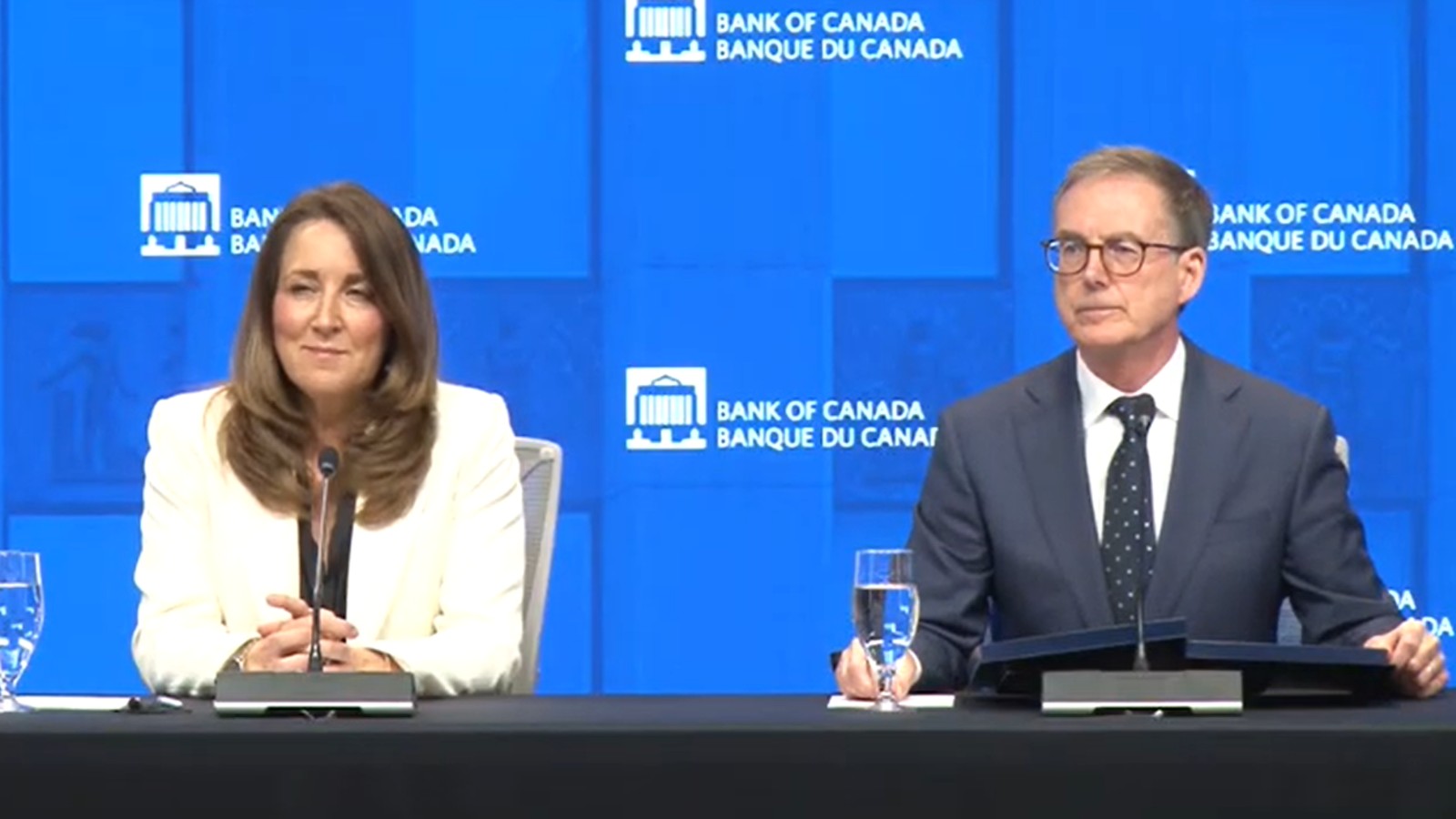
The Bank of Canada is keeping its key interest rate at 2.25 per cent as the economy remains weak and inflation moves higher.
In its latest decision, the bank said the conflict in the Middle East is pushing up global energy prices and disrupting supply chains, which is lifting inflation worldwide.
It said new U.S. tariff proposals and ongoing trade policy risks are also weighing on growth.
Governor Tiff Macklem said the bank is weighing several structural shifts as it sets policy.
“The Canadian economy is going through a period of restructuring, including shifts in trade, the adoption of AI and slower population growth,” he said.
“We’re looking at all of these factors as we update our forecast and assess where inflation and the economy are headed.”
Economy remains soft as inflation rises
The bank said Canada’s economy has been soft for several months. GDP edged down 0.1 per cent in the first quarter, weaker than expected in April.
Consumer spending grew 1.4 per cent, but government spending unexpectedly declined. Housing activity fell and business investment remained weak.
Employment has been volatile month to month, but overall job growth has been little changed since the start of the year.
The unemployment rate has been fluctuating between 6.5 and 7 per cent, with a reading of 6.6 per cent in May.
Despite the weak economy, the bank said inflation rose to 2.8 per cent in April.
The increase reflects higher global oil prices and the impact of the federal carbon tax being removed from the year‑over‑year calculation.
The bank said there is still limited evidence of broad‑based pass‑through from higher energy prices to other consumer prices.
Core inflation has moved down to around 2 per cent, and the share of CPI components rising above 3 per cent is close to its historical average.
The bank said global oil prices are roughly $10 a barrel higher than it assumed in April, and it expects inflation to hover near 3 per cent in the coming months before gradually easing toward the 2 per cent target.
Trade uncertainty remains a major risk
The bank said it is looking through the near‑term impact of higher energy prices but will not allow those increases to become persistent inflation.
It said monetary policy may need to be nimble if global risks shift, including further increases in oil prices or significant U.S. trade actions.
Macklem said trade remains a major source of risk for Canada.
“If negotiations with the United States land well, we could see more strength in exports and investment, but we have no influence over that outcome,” Macklem said.
The bank also said Canada is working through a period of structural change, including shifting trade relationships, the adoption of AI and demographic pressures.
It also explained that these developments complicate the economic outlook and will be monitored closely.
The bank said it remains committed to keeping inflation low and stable and is prepared to respond as needed as conditions evolve.