
 by admin
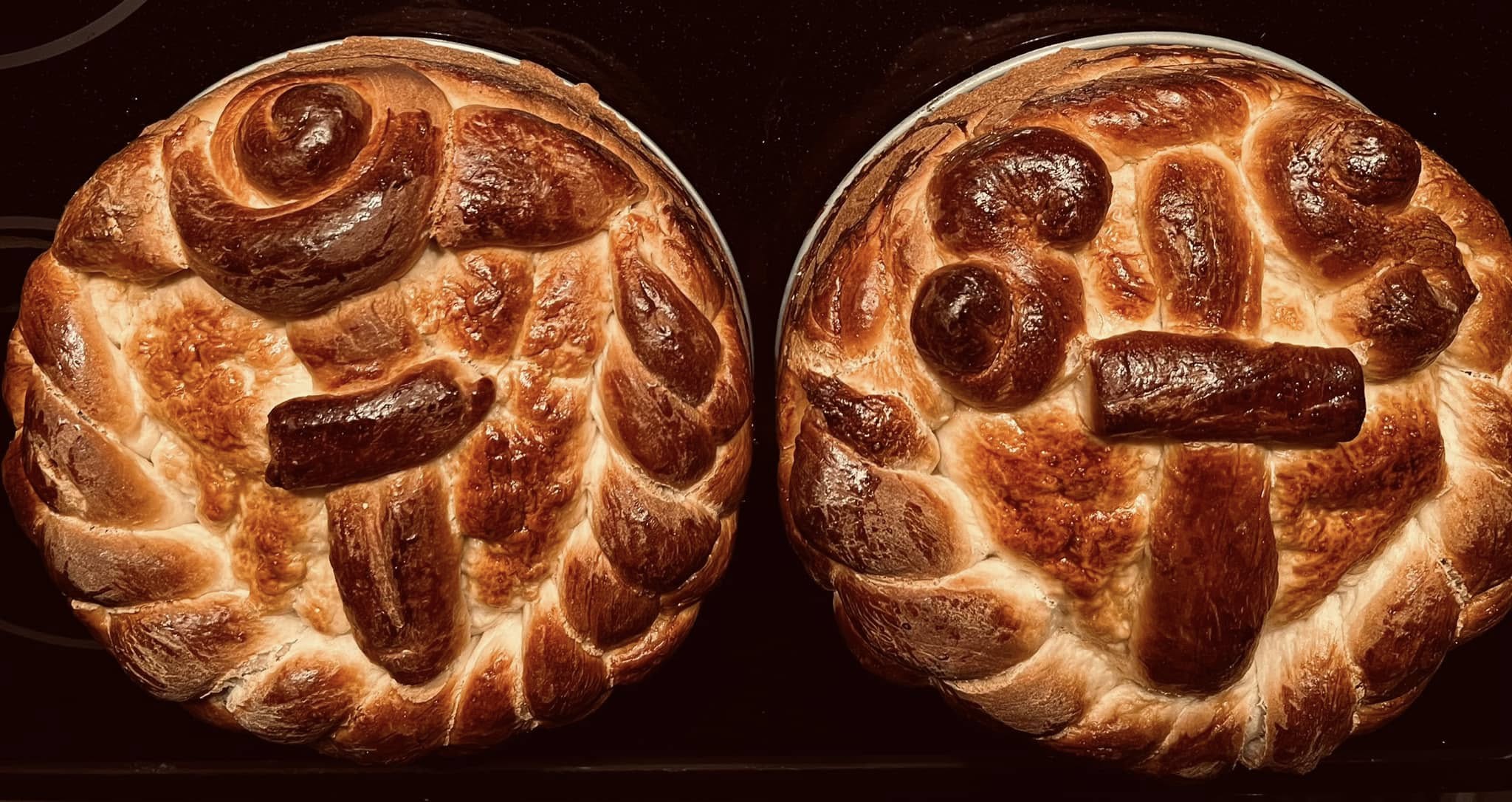
Every family has that one recipe that signals a holiday is truly here. For many Ukrainian households, Easter doesn’t officially arrive until the Paska dough is rising on the counter – a buttery, slightly sweet bread that carries generations of tradition in every slice.
Paska isn’t just food. It’s ceremony. It’s memory. It’s the fun memories of shaping dough into braids and crosses with my mother and knowing that my grandmother and great‑grandmother did the same. It’s the moment you lift the finished loaf from the oven and see that deep golden top – the kind of color that only comes from patience, good eggs, and a little bit of love.
There’s something special about the smell of Easter Paska rising in the oven – rich, warm, and full of meaning. This traditional bread has been part of Easter celebrations for generations, especially in Ukrainian and Eastern European families. Paska is baked with intention: it’s placed in the Easter basket for blessing at church, symbolizing Christ as the Living Bread
This version is soft, rich, and beautifully old‑world.
(Video below)
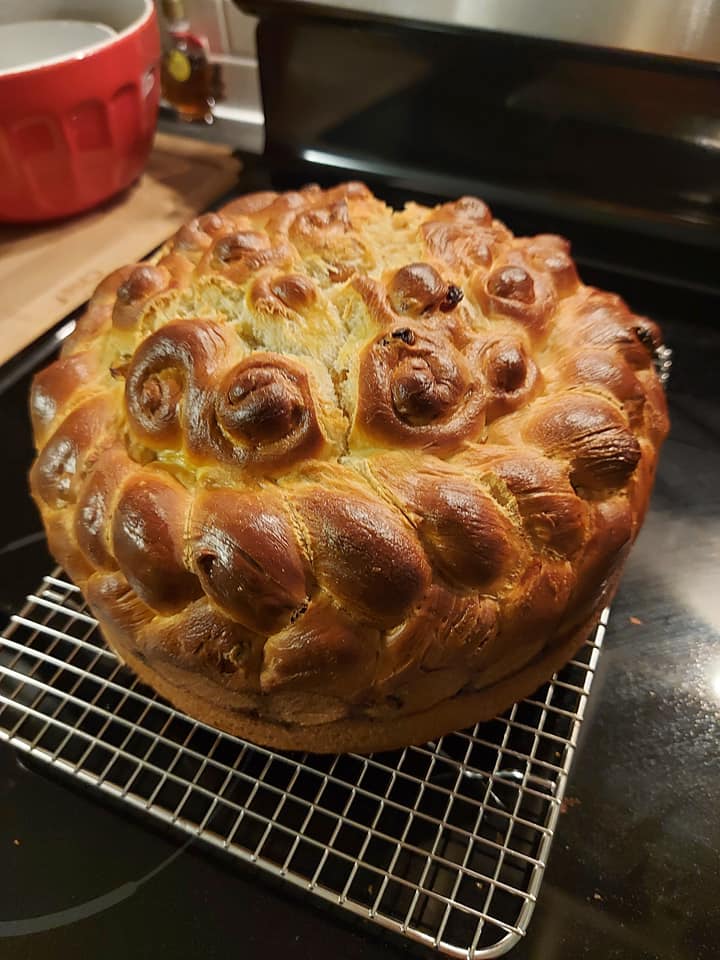
Recipe for Ukrainian Paska Bread
Ingredients
Dough
- 2 1/4 teaspoons instant dry yeast
- 1/3 cup granulated sugar
- 2 teaspoons salt
- 1/2 cup lukewarm water
- 1 cup whole milk
- 2 large eggs
- 1 teaspoon vanilla
- 1/4 cup unsalted butter, melted and cooled slightly
- 5 cups all-purpose flour
- ½ cup golden raisins (or more if you prefer)
- zest of one small orange – if large use half (optional)
Topping
- 1 large egg
- 1 tablespoon water
Instructions
1. Build the dough
In a large bowl, mix the first eight ingredients together in a stand mixer with the paddle. Add the flour and stir with a wooden spoon until a shaggy dough forms or use the dough hook on your mixer. Turn it out onto your work surface and begin kneading. It will take time – this is a stiff dough, but it should never feel dry. Keep kneading until it becomes smooth, soft, and elastic. When you poke it, the dough should gently spring back.
2. First rise
Place the dough in a lightly greased bowl, cover it with a tea towel, and let it rise in a warm, draft‑free spot until doubled – about 90 minutes.
While it rises, lightly grease your baking pans. You can use:
- Two 5-inch high-sided cake pans
- A springform pan
- Or the traditional method: clean metal cans
Whatever you choose, the dough should fill half the height of the pan.
3. Shape the loaf
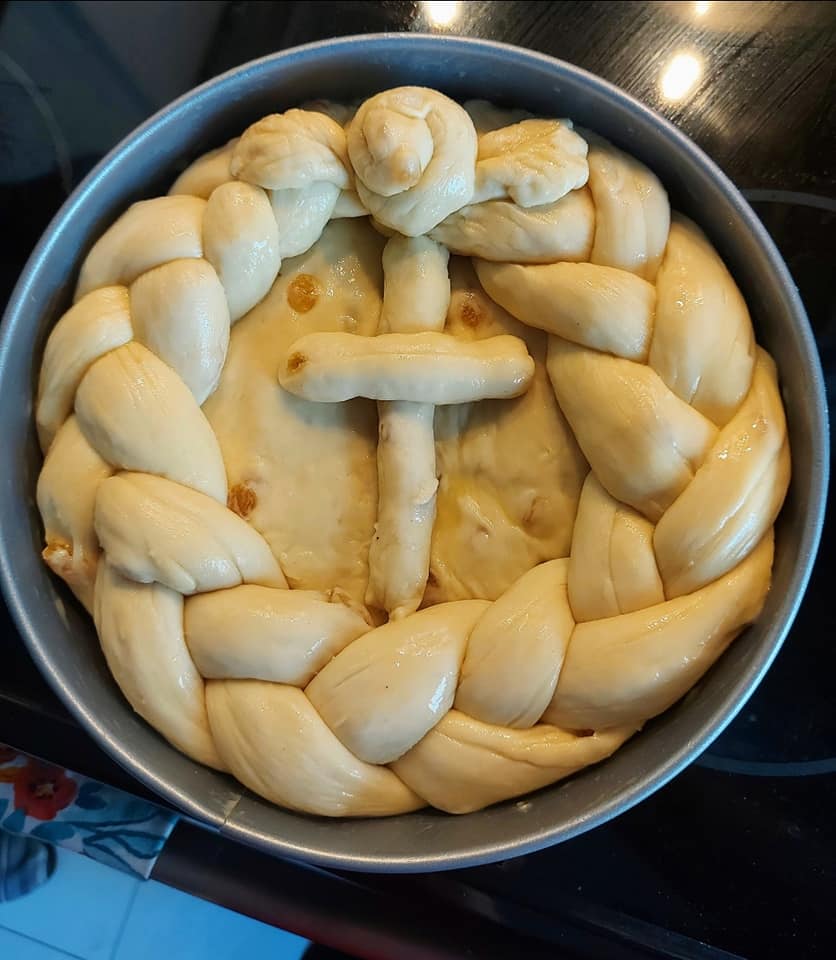
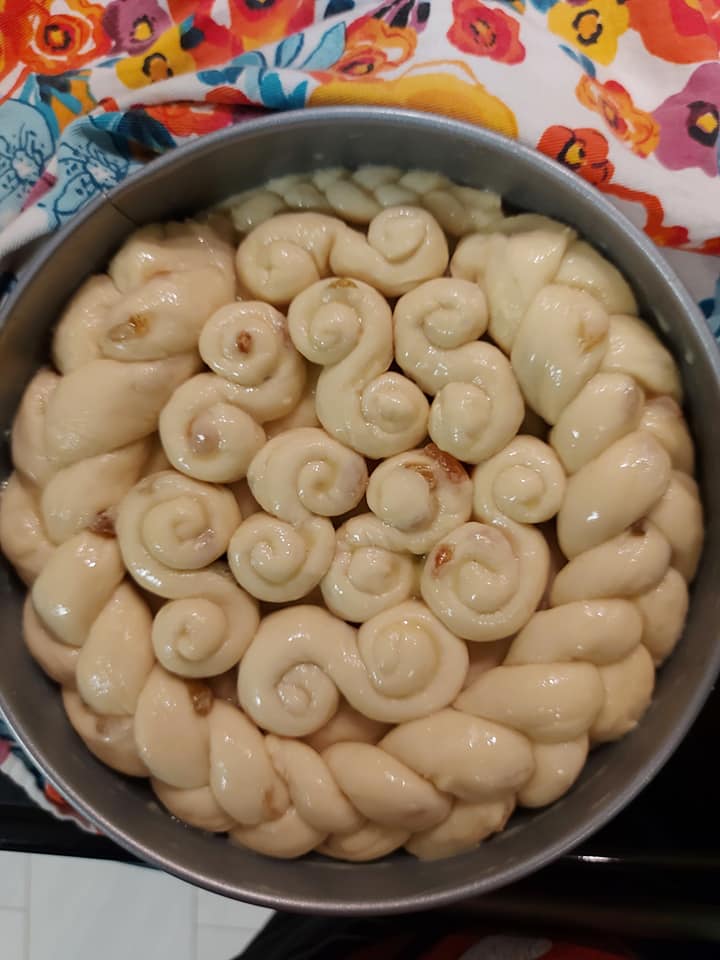
Turn the risen dough onto a lightly floured surface. If you want decorative braids or shapes, set aside about ¼ of the dough. Shape the remaining dough into a smooth ball and place it into your prepared pan(s).
4. Second rise
Cover again and let rise for about 45 minutes, until nearly doubled. Near the end of this rise, preheat your oven to 350°F and position a rack in the lower‑middle.
5. Create the decorations
Roll the reserved dough into strands – think back to making play‑dough snakes as a kid. Twist them into braids, spirals, crosses, or whatever symbols speak to you. Brush the top of the loaf with egg wash and gently press your decorations on, using the egg wash as glue. Then brush the entire top again, making sure to get into every crevice.
6. Bake
Bake until the top is a deep, rich golden brown and the internal temperature reaches 190°F. Depending on your pan size, times will vary.
7. Cool
Let the bread rest in the pan for 5 minutes, then remove it and cool completely on a rack before slicing.
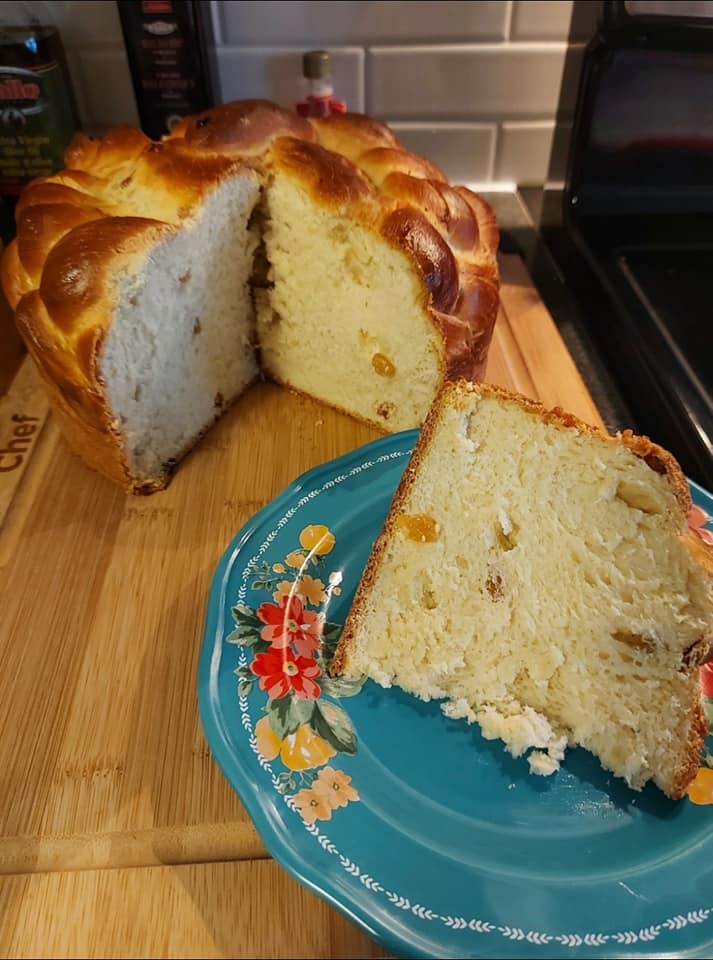
This particular paska recipe had orange juice added. If you do choose to add it reduce the amount of water you put it. I found personally it was too tangy for my liking so I no longer make it this way. The zest would be enough flavor.